Emerging Workforce Initiative
  • Home
  • Net Work Learning
  • Publications
  • About

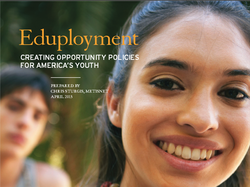
Youth Transition Funders Group: Eduployment Policy Report Released

4/30/2013

 
Picture
"Eduployment: The bifurcation of school and work, education and employment, college  and career is out of date and meaningless. We need to use a both/and rather than an either/or framework in going forward. We call this eduployment."
This policy brief outlines the importance of and strategies to keep highly at-risk youth in school, connect them to meaningful work experiences, and help them succeed in postsecondary education. Read the Policy Brief...

Workforce Investment Act Youth Program Overview

10/25/2012

 
The Department of Labor details the WIA Youth program in a new publication. WIA Youth services are designed for youth who are low-income, in- or out-of-school, aged 14-21 with one or more of the following barriers to employment: (1) deficient in basic literacy skills; (2) a school dropout; (3) homeless, a runaway, or in foster care; (4) pregnant, or parenting; (5) an offender; or (6) an individual (including a youth with a disability) who requires additional assistance to complete an educational program or to secure and hold employment. These youth are eligible to receive services to prepare them for post-secondary educational and employment opportunities, attain educational and/or skills training credentials, and secure employment.

This program is designed to improve the long-term job prospects of young people by providing basic skills, work readiness skills, occupational training, and citizenship skills. Local communities collaborate and establish partnerships, bringing together local workforce training providers, schools, community-based organizations, and other entities. WIA calls on local areas to create opportunities for youth that integrate key programmatic components such as preparation for post-secondary opportunities, linkages between academic and occupational learning, connections to the local job market, and appropriate follow-up services.

High Wage Career Pathways

9/28/2012

 
As jobs that require only high school or less have disappeared, postsecondary education and training on the job and in schools have become the gateways to the middle class. Most postsecondary education and training discussions focus on the baccalaureate pathway, but there has been an increasing interest in so-called “middle jobs.” These are jobs that require education and training beyond high school but less than a
Bachelor’s degree, and secure middle-class earnings.

A recent report by the Georgetown Center on Education and the Workforce lists high wage "middle" occupations and the five major pathways at the subbaccalaureate level that are most often required for entry: employer-based training, industry-based certifications, apprenticeships, postsecondary certificates, and Associate’s degrees. 

Read more about these occupations and training options...


Re-engaging Youth has Positive Impact

4/2/2012

 
Social Impact Research, the research division of Root Cause, releases an issue brief outlining the potential positive impact of re-engaing out of school and work youth in education, training and the workforce. According to research, effective investments in "disengaged youth" could reverse staggering individual and societal costs:

           $ 306,906         Lifetime cost of one high school dropout to the government
           $ 65.8 billion     Potential earnings loss of disengaged youth

Preparing disengaged youth for and connecting them to meaningful work experience can, according to the brief:
1. Encourage youth to re-engage with school
2. Develop academic persistence and career aspirations
3. Enable youth to gain valuable transferable job skills 
4. Reduce risky and deviant behaviors such as criminal activity, drug use, pregnancy, and violence
5. Reduce isolation for youth
6. Increase their self-awareness, resilience, hopefulness, and ability to cope with traumatic experience

For more information on the costs of disengaged youth, the barriers experienced by at-risk youth, and the qualities of effective programs...

            Social Issue Report: Youth Career Development

    Categories

    All
    At Risk
    Career Exploration
    College Readiness
    Economic Costs
    Effective Strategies
    Federal Workforce
    Funding
    Job Readiness
    Opportunity Youth
    Skills Gap
    Social Impact
    Work Experience

Site powered by Weebly. Managed by Bluehost